Yi Yi Ren Barley Tea Recipe: TCM Benefits for Dampness and Bloating
Some remedies find their way back to you. I tried this tea years ago, forgot about it entirely, and then one afternoon found myself craving it without quite knowing why. That kind of body memory is worth paying attention to.
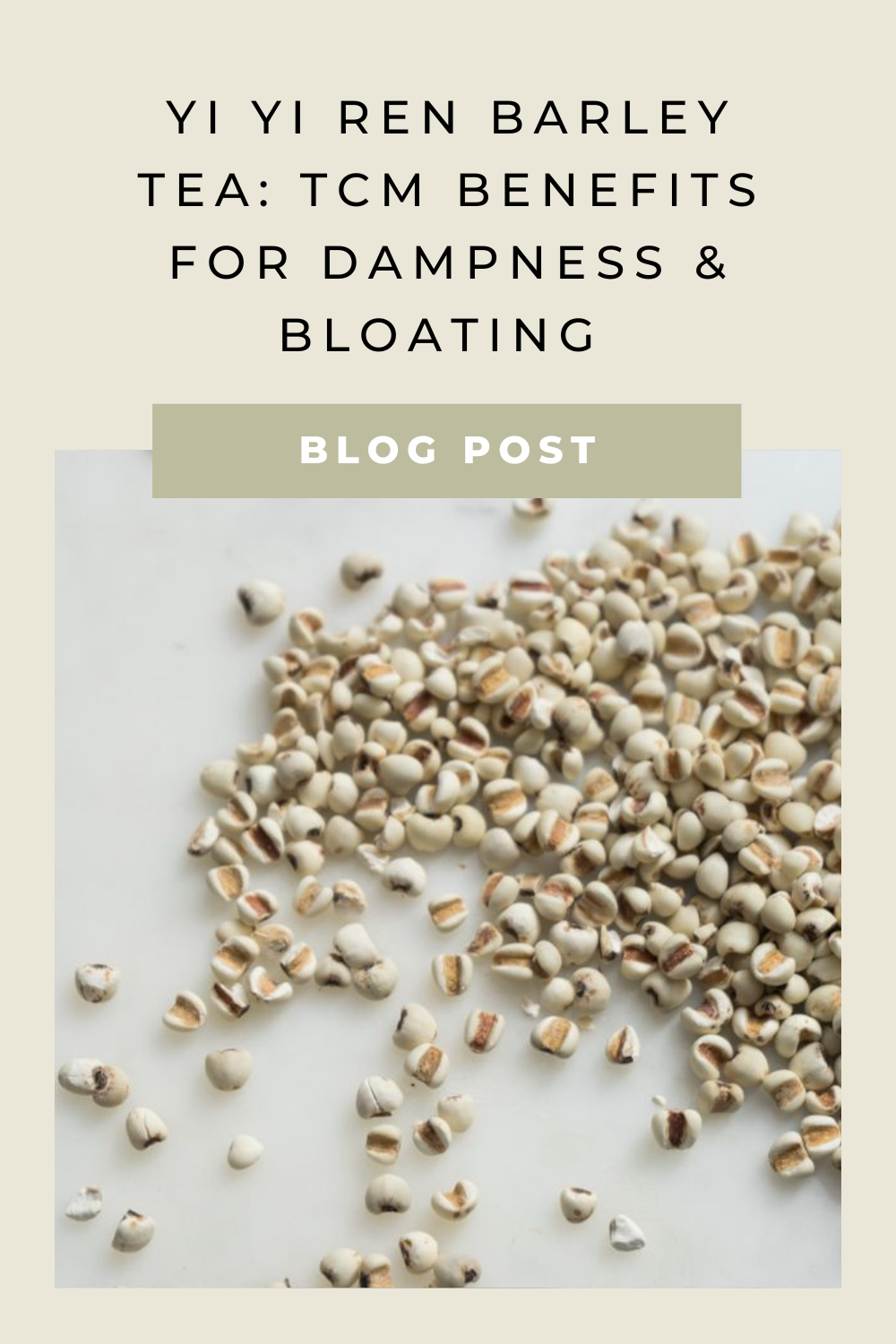
Yi Yi Ren, also known as coix seed or Job's tears, is one of those herbs that sits beautifully at the intersection of food and medicine. Though commonly called barley tea across East and Southeast Asia, it is actually a seed rather than a true barley, but the name has simply followed the drink through centuries of tradition. In China it has been eaten in soups, porridges, teas and herbal formulas for centuries, used both as daily nourishment and as a gentle corrective when the body needs a little help moving what has become stuck or heavy.
Benefits of Yi Yi Ren Tea from a TCM Perspective
Yi Yi Ren is sweet and bland in flavour, slightly cold in nature, and enters the Spleen, Stomach and Lung channels. Its primary role in TCM is to strengthen the Spleen and resolve Dampness, and it is particularly well suited to doing both at once. Many herbs that drain Dampness do so at some cost to Spleen Qi, but Yi Yi Ren is gentle enough for long-term use.
In TCM, Dampness is an internal pathological condition that arises when the Spleen's transforming and transporting function is impaired. Fluids that should be moving through the body begin to stagnate and accumulate instead. What follows can look like heaviness, bloating, fatigue, a foggy or muzzy quality to the mind, loose stools, swelling or a sense of being waterlogged from the inside. It is an incredibly common pattern in contemporary life, particularly when we are stressed, under-nourished, or eating in ways that burden digestion.
Yi Yi Ren addresses this slowly and steadily. It also has a secondary action of clearing Heat, making it particularly useful when Dampness and Heat have combined, a pattern that can show up as skin congestion, urinary irritation, or that sticky, uncomfortable quality some people notice in warmer months or when inflammation is worsening.
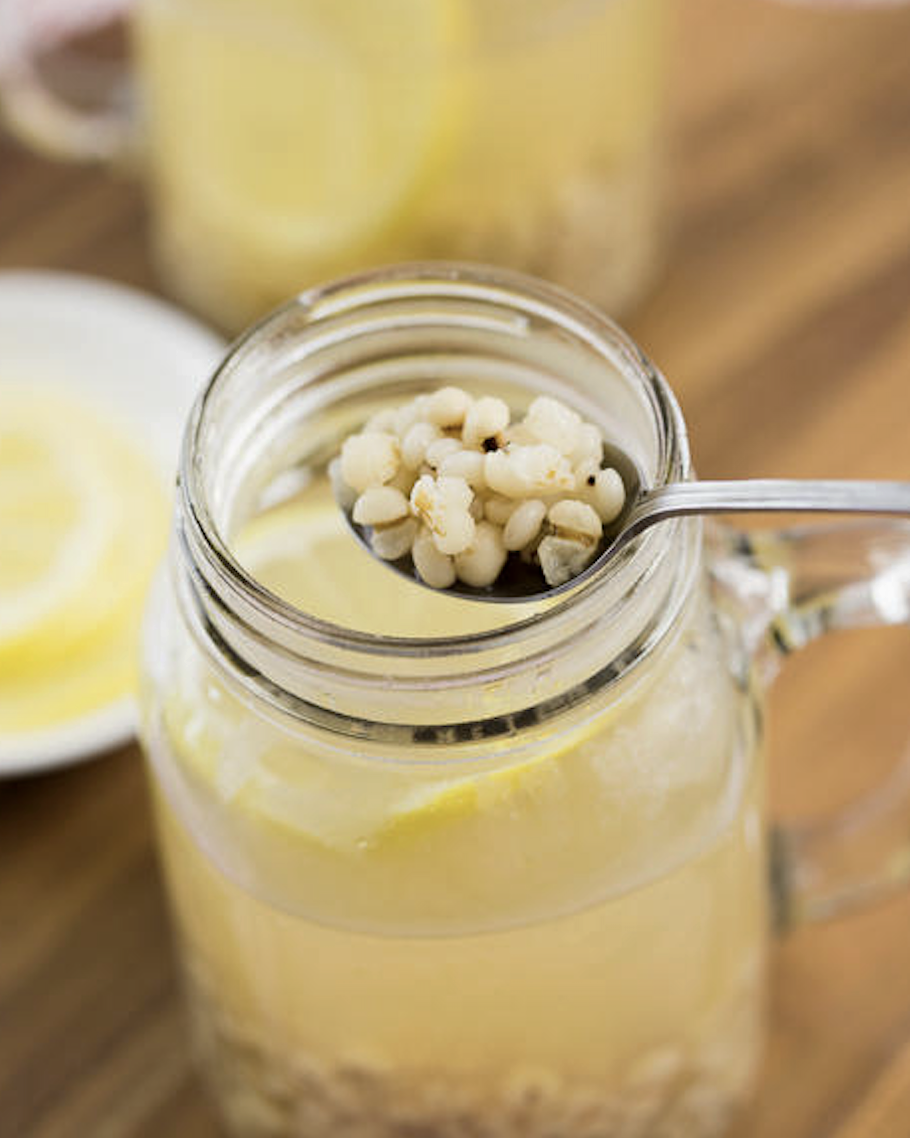
In this tea, lemon adds a sour, cool quality which gently supports the generation of fluids, harmonising the Stomach, and providing a mild movement to Liver Qi. Honey, sweet and neutral, enters the Lung and Large Intestine, tonifies the Middle Jiao, and moistens where there is dryness. Classically, honey is used in formula design to harmonise and soften. In this tea it offers the same action, tempering the cold nature of the Yi Yi Ren and making the whole drink more suitable for regular use.
Together, this tea supports Spleen function, resolves Dampness, gently moves stagnation, and moistens without overwhelming. It is the kind of drink that suits the body that feels heavy, sluggish, or slightly stagnant.
A note for those who are pregnant, particularly in the first trimester: Yi Yi Ren has a mild downward-moving quality and is traditionally used with caution during pregnancy. If you are pregnant or trying to conceive and want to use it regularly, it's worth checking in with your practitioner first.
Benefits from a Western Nutrition Perspective
The biomedical lens confirms much of what TCM has observed for centuries. Yi Yi Ren is rich in protein, fibre, amino acids and B vitamins. These nutrients support sustained energy, healthy digestion and cellular repair. Its high fibre content promotes regular bowel movements and supports gut health, which maps closely to its TCM action of moving what has become stagnant in the digestive tract.
The seed contains bioactive compounds including coixol and flavonoids that have anti-inflammatory properties, and there is growing interest in its role in supporting metabolic health and skin clarity. Research also suggests it may help keep the gut microbiome balanced, a finding that aligns beautifully with its classical use as a Spleen tonic. Lemon brings vitamin C and digestive support, while honey offers antimicrobial properties and a gentle prebiotic effect. Both Western and Chinese medicine perspectives can agree that there are many benefits on offer from this tea!
The Recipe
Serves: a pot, enough for 2–3 cups
50–80g yi yi ren (Approx 5 tbsp)
2L water
Juice of ½–1 lemon
Honey to taste
Rinse the yi yi ren well. For a warmer, nuttier flavour and a gentler action on digestion, dry toast the grains in a pan over medium heat until lightly golden and fragrant.
Add to a pot with the water, bring to a boil, then reduce to a low simmer for 40–60 minutes, until the liquid is milky and slightly thickened.
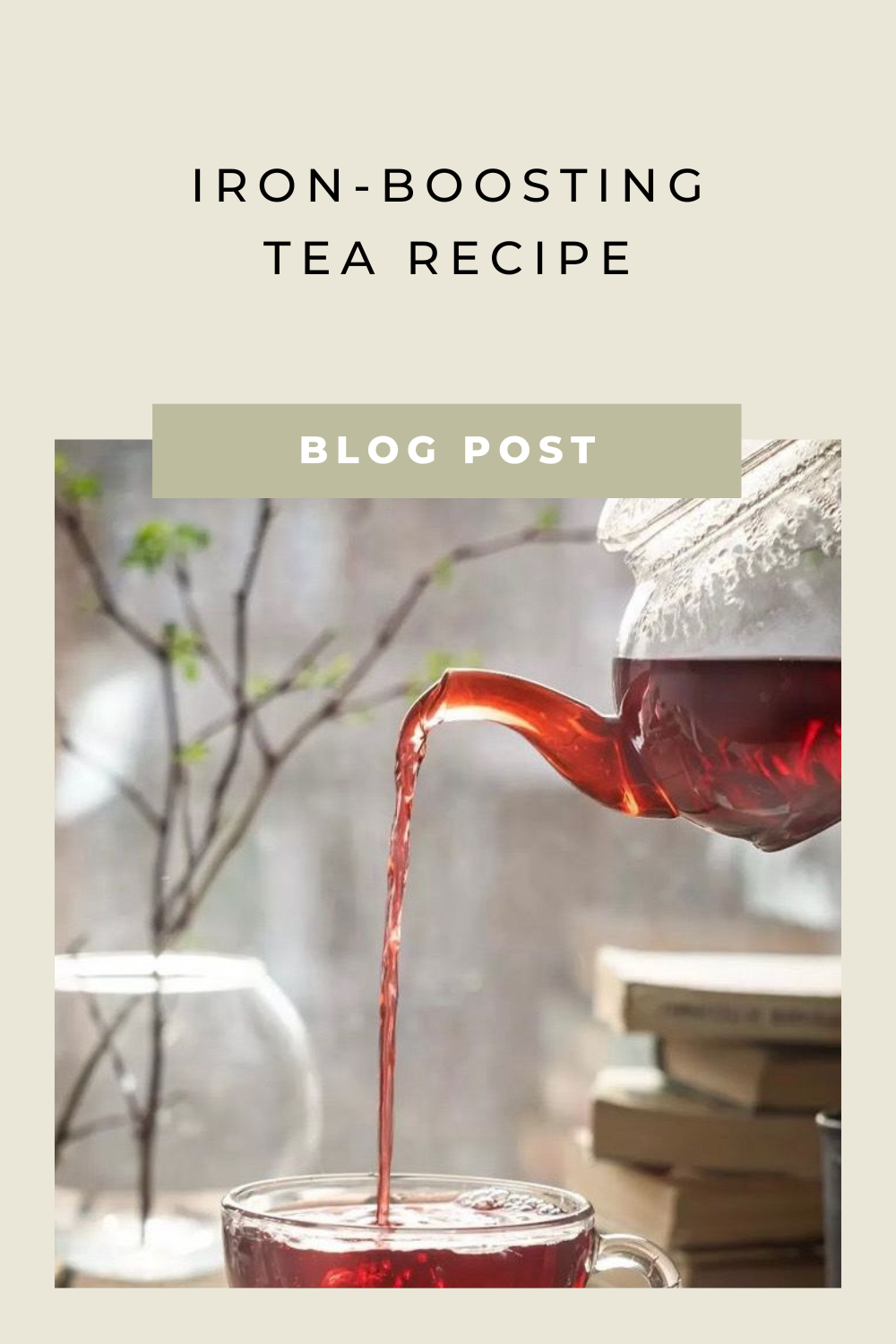
Strain, or leave the grains in - they're soft and pleasant to eat. Allow to cool to warm, then add the lemon and honey off the heat. Both are best kept away from high temperatures to preserve their properties.
Drink warm or at room temperature. Keeps in the fridge for 1–2 days.
* If you can't source yi yi ren, pearl barley makes a gentle substitute. The flavour and therapeutic action won't be identical, pearl barley is warmer in nature and milder in its dampness-resolving effect, and lacks the Heat-clearing quality of coix seed, but it is still a nourishing and healing drink in its own right.
This is a small impactful way to support your health. Small things, done consistently, are often where the most meaningful change happens in the body.
If you're curious about Dampness, Spleen Qi, or what patterns might be sitting underneath your symptoms, there's more to explore in my blogs.
Otherwise, you're always welcome to book in and receive an individualised healthcare plan in clinic - Book an appointment to get started!

Veronika Peovska
(BHSc Acupuncture)
“To be skilled at nurturing one’s nature and wellbeing is to treat disease before it arises.” - SUN SIMIAO